 Missing the tax deadline does feel stressful but it does not mean the situation is beyond repair or that you owe a lot of money to the Canada Revenue Agency (CRA).
When you’ve missed filing your taxes, the best thing you can do is deal with the return as soon as possible because filing late can lead to penalties, interest, delayed benefits, and continued CRA notices.
Once your return is filed you’ll have a clearer picture of what you owe, what refund may be coming, and what steps need to be taken next.
Continue reading for basic answers to the questions you may have if you’ve fallen behind in filing your taxes.
If You Missed the Tax Deadline Do Not Ignore It
Late-filing penalty and interest charges
If you owe money and do not file, the CRA may apply a late-filing penalty and/or charge interest on the unpaid amount. If you are owed a refund you may not face the same penalty issue but you are still delaying money that would be coming back to you.
Late filing will also affect benefit and credit payments. Filing your return helps the CRA calculate programs such as GST/HST credits, Canada child benefit payments, and provincial or territorial credits.
If the CRA does not have your current return, those payments will likely be interrupted or delayed.
The first step is simple
Get the return filed. Even if your paperwork is not perfectly organized yet, it is much better to start organizing the information now than to keep pushing the problem forward.
What Happens When You File Your Taxes Late?
You may be charged a late-filing penalty
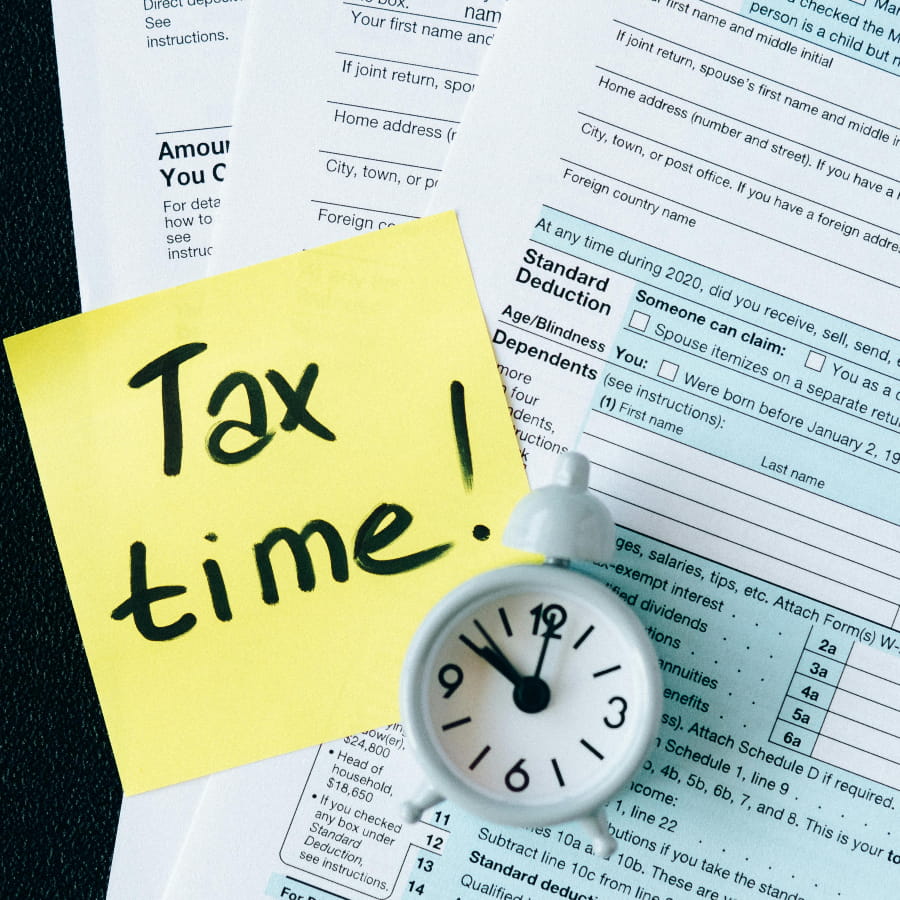 If you file late and have a balance owing, it starts to get pretty expensive.
The CRA can charge a late-filing penalty. For 2025 personal tax returns, the standard late-filing penalty is 5% of the balance owing, plus 1% of the balance owing for each full month the return is late up to 12 months.
Penalties can grow quickly when a return is left unfinished for several months. The penalties can also be higher if you have been charged a late-filing penalty in recent years and the CRA issued a demand to file.
This is one of the main reasons that late returns should be handled as soon as possible even when the amount owing is not yet known.
Interest may be added to the balance
The interest is a separate issue from the late-filing penalty. If you owe tax and the amount was not paid by the payment deadline, the CRA will charge interest on the unpaid balance. This interest can continue until the balance is paid in full.
This is where many people get caught off guard. They think the main issue is the tax return itself but the unpaid balance can keep growing after the deadline. Filing the return gives you a confirmed balance to pay which makes it easier to plan your next steps.
Your benefits or credits may also be delayed
Filing late may also delay payments that depend on your income tax return. The CRA uses your tax return to calculate benefit and credit payments. If the return is missing those calculations can be delayed or interrupted.
If you qualify for credits or benefits, filing late may delay money that should help with household expenses.
The bottom line is that a late return should still be filed so your account can be brought up to date and any benefit or credit payments you qualify for can be properly calculated.
Still File Even if You Cannot Pay the Full Amount
One of the biggest mistakes people make is waiting to file because they believe they have to pay the full balance owning.
Filing and paying are connected but they are not the same step.
If you cannot pay everything right away, filing the return still helps reduce the chance of additional late-filing penalties.
Once the return is filed you can see the actual balance owing and you may be able to make a partial payment and review your budget, or you can contact the CRA about payment options.
The important thing is to stop guessing and get the return completed.
What If You Are Self-Employed?
Self-employed individuals usually have more time to file their tax return than regular employees.
For 2025 tax returns, the filing deadline for self-employed individuals is generally June 15, 2026.
If your spouse or common-law partner was self-employed, that later filing deadline may also apply to you.
The important thing to remember is that the filing deadline and payment deadline are not always the same.
If you owed tax for 2025, your payment was still due by April 30, 2026.
This means interest may apply to an unpaid balance, even if your return is filed by the June deadline.
This matters for sole proprietors, contractors, freelancers, and small business owners.
If your records are behind or your bookkeeping is incomplete, it is wise to get organized before the filing deadline gets closer.
What If Your Business or Corporation Is Late Filing?
Late filing can also create problems for corporations. If a corporation files late and has unpaid tax owing, the CRA may charge a failure-to-file penalty.
This penalty can apply even when the business is small or inactive depending on the filing obligation and the balance owing.
Corporate filing deadlines
Corporate filing deadlines are different from personal tax deadlines. They are usually based on the corporation’s fiscal year-end which means business owners shouldn’t assume that the personal tax deadline also applies to their corporation.
If your corporation is behind in filing, the next best step is to review the year-end date, bookkeeping records, income, expenses, payroll records, GST/HST filings, and prior CRA notices.
What You Should Gather Before Filing Late
Getting organized is often the hardest part but once the paperwork is together, the return becomes much easier to complete.
Start with the documents that show income, deductions, credits, payments already made, and any CRA communication you have received. These include:
- T4 slips, T5 slips, T3 slips, and other tax slips
- Self-employment income records
- Business expense receipts and invoices
- RRSP contribution receipts
- Medical, childcare, tuition, or donation receipts
- Rental income and expense records, if applicable
- Prior-year notices of assessment or reassessment
- CRA letters, notices, or requests for information
- GST/HST, payroll, or corporate records, if you operate a business
The goal is to gather enough information to prepare the return properly and avoid missing any income, deductions, or credits.
If you are unsure whether a document matters, keep it with your tax records and ask your tax accountant before leaving it out.
What If You Cannot Find Every Document?
Missing paperwork is common. Some people wait to file because they cannot find one slip, one receipt, or one statement.
In some cases, tax slips may be available through CRA My Account, or the missing information may be requested from an employer, financial institution, or payer.
For business owners, missing records may take more work. Bank statements, credit card statements, invoices, accounting software, and receipts may all need to be reviewed.
If information is missing you need to identify what is missing, look for available records and get help where needed.
Can CRA Penalties or Interest Be Reduced?
In some situations, the CRA may consider cancelling or waiving penalties and interest. This is generally handled through taxpayer relief provisions and is usually connected to circumstances beyond your control.
Examples may include serious illness, financial hardship, a natural disaster, or other extraordinary circumstances.
This relief is not automatic. You need to explain the situation, provide support where possible, and show why you could not meet your tax obligations on time. It is also important to understand that taxpayer relief does not usually remove the original tax balance owing.
If you believe there were serious circumstances that prevented you from filing or paying on time, it may be worth reviewing whether a taxpayer relief request makes sense.
This should be handled carefully, especially if the CRA has already sent notices or charged penalties.
Summary of How to Get Back on Track
 The best way to deal with late taxes is to break the problem into clear steps. You do not need to solve everything in one moment, but you do need to start.
The longer a return remains un-filed, the more stressful it usually becomes.
- Gather your income slips, receipts and CRA notices.
- Confirm which tax years are missing or unfinished.
- Organize your business or personal records.
- File the oldest required return first if more than one year is late.
- Review any balance owing, refund or CRA notice of assessment.
- Make a payment or look into payment options if you owe money.
- Set up a better system for next year’s records.
Get Help Filing Your Late Tax Return
If you are late filing your taxes, it is better to deal with the issue now than to keep delaying.
LLM Business Solutions provides tax services in Simcoe to help individuals and businesses comply with CRA requirements before small tax problems become bigger and more expensive ones.